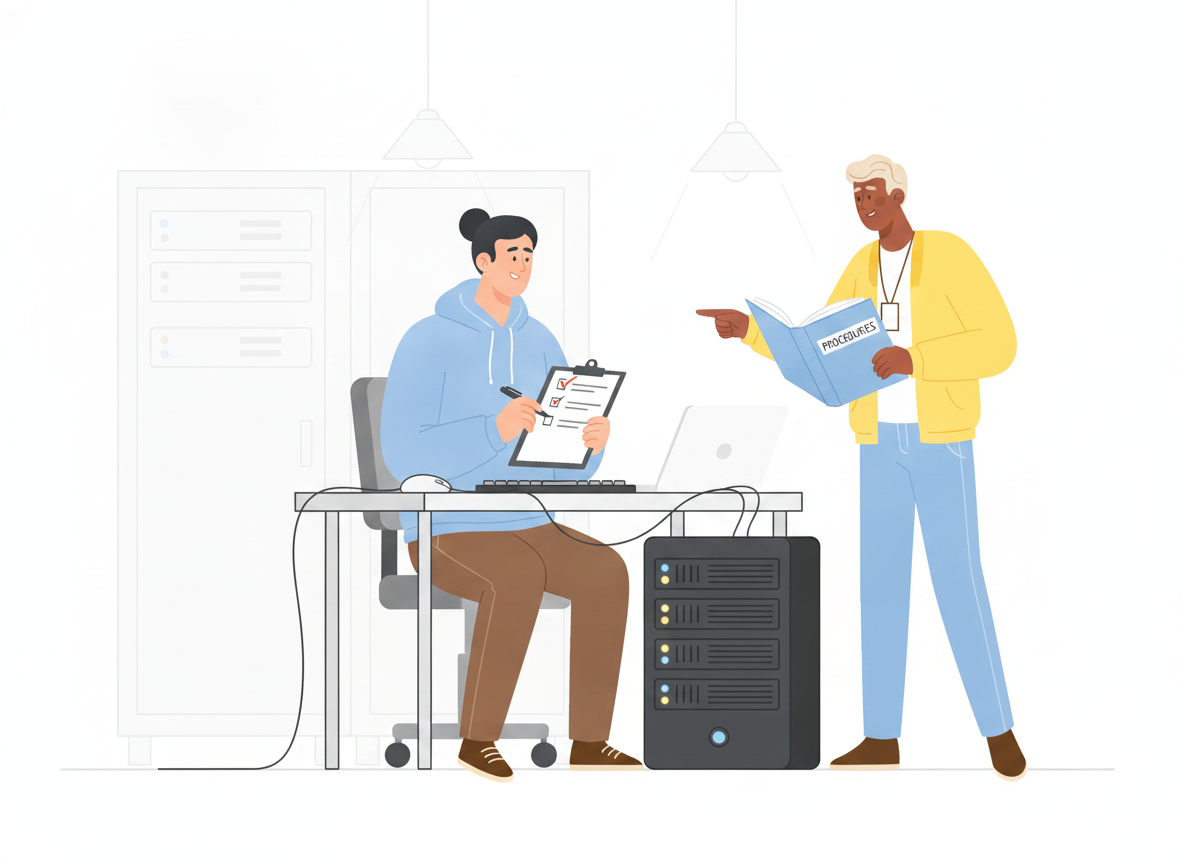
Runbook vs Playbook: The IT Team's Guide to Both (and When to Use Each)
- Sonat Team
- 09 Jul, 2026
- 06 Mins read
- IT Documentation
It’s 2 a.m. A service is down, an alert is buzzing, and the one person who knows how to fix it is on a plane. What your on-call engineer opens next decides whether the outage lasts five minutes or five hours. That document is either a runbook or a playbook — and knowing which is which is the difference between confident action and frantic guessing.
The two words get used interchangeably, but they solve different problems. This guide clears up the runbook vs playbook question, shows where standard operating procedures (SOPs) fit, and gives you a practical way to write runbooks your team will actually trust when it counts.
Runbook vs playbook, in one sentence
A runbook is a precise, step-by-step set of instructions for handling one specific, well-understood task — restart this service, rotate that certificate, restore this backup. A playbook is higher-level guidance for a broad, unpredictable situation — a major outage or a security breach — that tells responders how to coordinate and decide. Put simply: a playbook decides what to do; a runbook shows exactly how to do it.
What is a runbook?
A runbook is a documented procedure for a routine or repeatable operation. It assumes the situation is already understood and the goal is to execute reliably, the same way every time, no matter who’s holding the pager.
Good IT runbooks read like a recipe. They cover a single scenario — “web application stuck or crashed: do a rolling restart” — and spell out the commands, the expected output, and how to confirm the fix worked. Because they’re so concrete, runbooks are the backbone of IT operations: server restarts, failovers, disaster-recovery restores, onboarding a new environment, or clearing a stuck queue.
The value shows up under pressure. Site reliability engineering practice puts it bluntly: the first priority in an incident is to mitigate, not to fully understand the root cause. A runbook that captures a known-good mitigation — a rollback, a drain, a restart — lets a first responder act in minutes instead of reverse-engineering the system live.
What is a playbook?
A playbook is a strategic guide for a category of situations that are messy, high-stakes, and different every time. It doesn’t try to script every keystroke, because it can’t. Instead, it defines roles, decision points, communication paths, and the sequence of judgment calls a team makes together.
Incident response is the classic example. A mature playbook assigns clear roles — an incident commander who directs the response and decides on public announcements, a scribe who documents actions, subject-matter experts who investigate, and a liaison who updates stakeholders. It sets rules of engagement, too. In established incident-response practice, responders are told to announce suggestions to the incident commander and not to take action unless instructed — a coordination rule, not a technical step.
That’s the tell: a playbook governs how people work together through uncertainty. The individual technical fixes they reach for along the way are runbooks.
Runbook vs playbook: the core difference
Here’s the distinction at a glance.
| Runbook | Playbook | |
|---|---|---|
| Scope | One specific, defined task | A broad, unpredictable scenario |
| Question it answers | How do I do this exactly? | What’s our approach and who does what? |
| Predictability | High — same steps every time | Low — adapts to the situation |
| Detail level | Precise commands and checks | Roles, decisions, communication |
| Typical use | Restart, restore, failover, rotate | Major outage, security incident, crisis |
| Audience | The engineer executing the fix | The whole response team |
The two are partners, not rivals. During a serious incident, the playbook governs the overall response while responders reach for individual runbooks to carry out each concrete step. When a mature team declares an incident, they lean on a framework and set of defined procedures established beforehand — the playbook — and follow documented procedures for the specific fixes — the runbooks.
Where SOPs fit: runbook vs playbook vs SOP
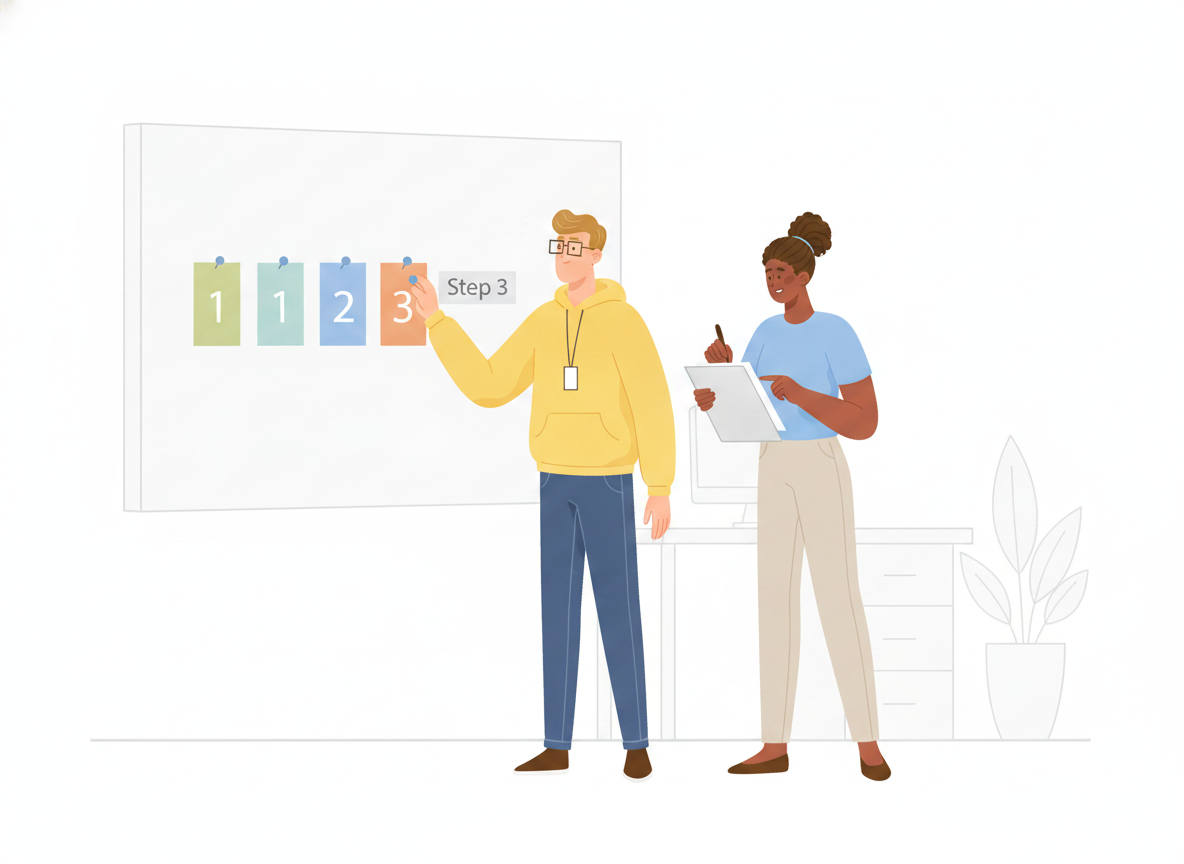
A third term rounds out the picture. A standard operating procedure (SOP) is a formal, step-by-step instruction for a routine business task, written for consistency and often for compliance — how to offboard an employee’s accounts, how to process a data request, how to run the monthly close.
The three form a natural hierarchy:
- SOP — the foundation. Routine, predictable tasks done the same way every time, often for audit and governance reasons.
- Runbook — a technical, IT-focused SOP for a specific operational scenario, sometimes with conditional steps (“if the health check still fails, escalate”).
- Playbook — the strategy layer that coordinates people and decisions when the situation is unpredictable.
A useful way to remember it: SOPs keep the business consistent, runbooks keep systems running, and playbooks keep teams aligned when things break.
What makes a good runbook
Anyone can write a document titled “runbook.” Writing one that works at 2 a.m. takes discipline. The best IT runbooks share a few traits.
- One scenario, clearly named. State the trigger up front — which alert or symptom starts this runbook, and which service it affects. A responder should confirm they’re in the right place in seconds.
- Copy-paste-ready steps. Commands should be exact and safe to run in order. Ambiguity (“restart the relevant service”) is where mistakes happen; specificity (“run
systemctl restart api, then verify with the health check below”) is where confidence comes from. - Expected results and checkpoints. Every step should tell the reader what “good” looks like, so they know whether to continue or escalate.
- Escalation and ownership. Name who owns the service and when to hand off. A runbook that ends in a dead end just moves the panic downstream.
- Written for a stranger. Assume the reader has never done this task and doesn’t have tribal context. If it only makes sense to the person who wrote it, it isn’t a runbook — it’s a note.
How to write an IT runbook
You don’t need a heavyweight template to start. A dependable IT operations runbook usually has the same anatomy:
- Title and trigger — the scenario and the alert or condition that activates it.
- Impact and severity — what breaks and who’s affected, so the reader can gauge urgency.
- Prerequisites — access, tools, and credentials needed before starting.
- Step-by-step procedure — numbered actions with exact commands and verification after each.
- Rollback and safety notes — how to undo a step if it goes wrong.
- Escalation path — who to contact and when the runbook’s scope ends.
- References — related runbooks, dashboards, and owners.
Build your library from real events. After every incident, ask: could a runbook have made this faster? If yes, write it while the memory is fresh. Over time you’ll cover your most common failure modes — and the value compounds, because each documented procedure is one less thing that depends on a single person being awake.
Keep runbooks alive as a single source of truth
The hardest part of runbooks isn’t writing them — it’s keeping them true. A runbook that references a decommissioned server or an old command is worse than none, because it sends a stressed responder down the wrong path. Documentation only helps if it’s current, findable, and trusted.
That’s a documentation problem, not just an IT one. Runbooks work best when they live in one place your whole team can reach, with a version history so you can see what changed and restore an earlier version if a procedure regresses. They need real search, so an on-call engineer finds the right steps by symptom in seconds rather than digging through scattered folders. And they should be easy enough to update that fixing a stale command takes a minute, not a change request.
This is exactly where a purpose-built documentation platform like Sonat earns its place. Your team writes and organizes runbooks in a familiar editor, keeps every version tracked as a single source of truth, publishes to a fast, searchable site, and controls who can see internal procedures — so the knowledge lives in your documentation, not in someone’s head. Fewer late-night guesses, fewer repeat tickets, and a team that can act the moment an alert fires.
The bottom line
Runbooks and playbooks aren’t competing ideas — they’re two layers of the same goal: acting well under pressure. Use a playbook to coordinate people through the unpredictable, and a runbook to execute the known fix precisely. Add SOPs for routine, auditable tasks, keep all of it current in one trusted home, and you turn hard-won operational knowledge into something your whole team can rely on — at 2 a.m. or any other time.
Related Articles

Runbooks: A Practical Guide to Repeatable IT Operations
What IT runbooks are, what to put in one, and how to write a runbook your team will actually use — then keep it current so on-call stops relying on memory and heroics.

IT Runbooks: How to Document Operations Anyone on Your Team Can Run
A practical guide to writing IT runbooks your whole team can follow under pressure — what belongs in one, how to structure it, and how to keep it current.

IT Documentation: A Practical Guide to Fewer Tickets
A practical best-practices guide to IT documentation — runbooks, internal wikis, onboarding docs, and SOPs — that helps teams cut repeat support tickets and resolve incidents faster.