How to Set Up a Powerful FAQ Page
Are you struggling to provide answers to your customers' questions on your website? Do you feel like you're constantly bombarded with the same inquiries over and over again?
Well, fear not because creating a powerful FAQ page can solve your problems.
Not only can it save you time and effort in responding to the same questions repeatedly, but it can also be a valuable tool to showcase your expertise and knowledge to potential customers.
But how do you create an effective FAQ page that will keep your visitors engaged and provide them with the necessary information?
In this article, we will guide you through the steps to set up a powerful FAQ page that will address your customers' concerns and make them want to continue exploring your website. So, let's get started!
What is FAQ stand for?
Providing helpful info for your customers is crucial in the world of business. You can do this by having a Frequently Asked Questions (FAQ) page on your website. An FAQ page consists of commonly asked questions your customers may have about your business, products, or services. The primary aim of an FAQ page is to provide quick and straightforward answers to your customers' questions, saving them and you time and effort and improving overall customer satisfaction.
FAQ is an acronym that stands for Frequently Asked Questions, a term that has been in use since the early days of the Internet. Nowadays, it's a common feature of many websites, regardless of their industry. Typically, an FAQ page includes a comprehensive list of questions and answers relevant to your business or industry. These can cover various topics, from shipping and returns policies to technical issues and product specifications.
Creating an impactful FAQ page requires careful thought and planning. The goal should be to predict the questions your customers are likely to ask and provide complete and accurate answers that address their concerns. A well-organized FAQ page can also help reduce the number of customer service requests your team receives, freeing up their time to deal with more complicated issues. By following best practices for FAQ page design and content creation, you can create a valuable resource for your customers that enhances their overall experience with your brand.
What makes FAQs so important?
FAQs are an incredibly important aspect of any business's customer service strategy. Why, you ask? Well, for starters, FAQs can help to mitigate the frequency of customer inquiries and support tickets that a business has to deal with. By preemptively addressing common questions and concerns, customers are empowered to find the information they seek on their own, thereby saving both the business and the customer some precious time and a healthy dose of frustration.
In addition to curbing customer inquiries, FAQs can also play a pivotal role in establishing a business's trust and credibility with prospective customers. When a company presents detailed and helpful information about its products or services, it demonstrates an authoritative and dedicated approach to delivering a positive customer experience. This, in turn, can help cultivate customer loyalty and enhance the overall standing of the business.
But wait, there's more! Did you know incorporating pertinent keywords and phrases into your FAQs can boost your website traffic and search engine rankings? It's true! Optimizing your FAQs for search engines can elevate your online visibility and attract more potential customers actively searching for information about your product or service.
And let's not forget about the paramount importance of customer satisfaction. When you provide prompt and concise answers to your customer's questions and concerns, you not only enhance their experience with your business, but you also increase the likelihood of generating positive feedback and, ultimately, more sales. So, whether you're a seasoned business owner or just starting, make sure to invest in FAQs – they're a win-win for everyone involved!
How to Set Up a FAQ Page
To make a helpful FAQ page, consider a few key factors.
To create a useful FAQ page, there are a few key factors that you need to consider. First and foremost, it is essential to identify the most frequently asked questions from your customers or website visitors. These questions can cover various topics, such as product information, pricing, shipping information, and return policies. By pinpointing the most common questions, you can craft clear, concise answers that provide the information users seek.
When organizing your FAQ page, it is helpful to group questions into relevant categories, such as "Product Information," "Shipping and Delivery," or "Returns and Refunds." This categorization can make it easier for users to find the necessary information and navigate the page more efficiently. Additionally, using a consistent format for each question and answer, such as bullet points or numbered lists, can make the information easier to scan and digest.
Regarding design, your FAQ page should be visually appealing and easy to find on your website. One way to achieve this is by using a different font or color scheme to distinguish the FAQ page from the rest of your website. Furthermore, including a search bar or index can help users quickly find the necessary information. A search bar is handy if your website has many questions and answers.
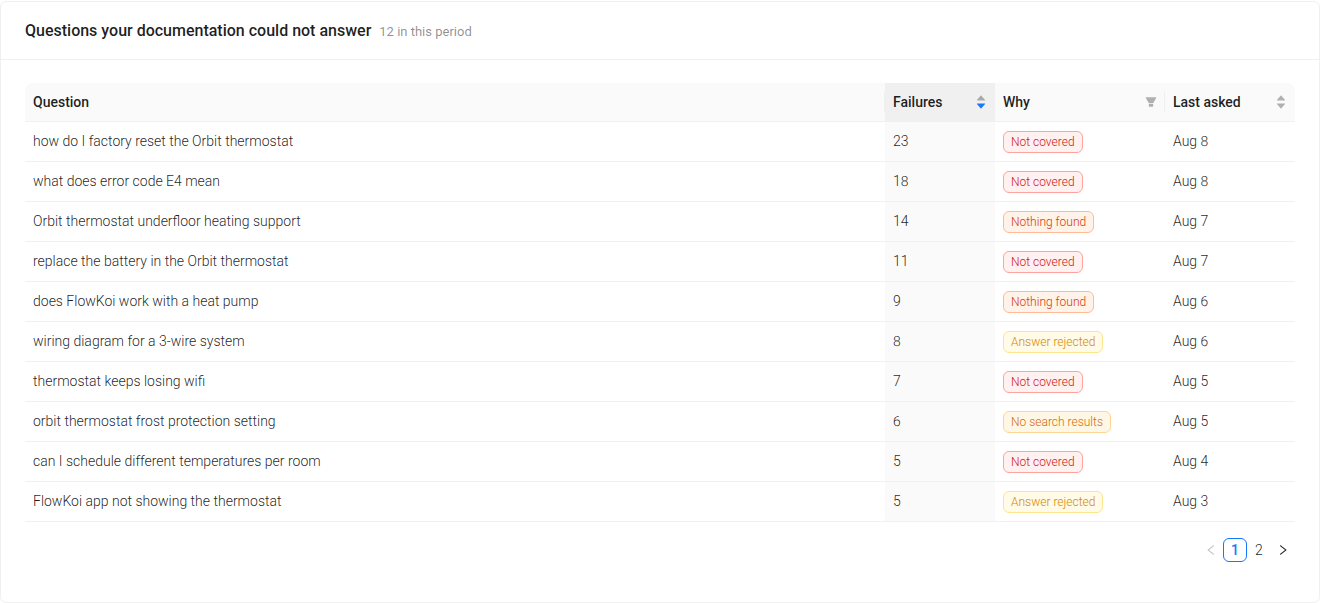
Lastly, it is crucial to keep your FAQ page up-to-date and relevant. As your business evolves and changes, new questions may arise that must be added to the page. You should also regularly review the existing content to ensure it is still accurate and helpful to your users. By keeping your FAQ page up-to-date, you can improve user experience and reduce the need for customer support.
Remember, an effective FAQ page will enhance user experience and reduce the need for customer support. So take the time to create a good one!
Create a Powerful FAQ online with a knowledge manager
Creating an FAQ page can seem daunting, especially if you have many products or services. However, fear not! That's where a knowledge manager comes in handy. And let me tell you, Sonat is a free knowledge manager that can be a powerful tool for businesses looking to create a comprehensive FAQ page. Its chock-full features make it easy to organize your knowledge base and create professional-looking content.
One of the key benefits of using Sonat is its user-friendly interface. It's designed to be intuitive and easy to use, so even if you're not tech-savvy, you can create a powerful FAQ page that will help your customers find the information they need. You can easily add new questions and answers, organize content into categories, and make updates as needed.
But wait, there's more! Another benefit of using Sonat is its powerful search functionality. It uses advanced algorithms to help customers find the information they need quickly and efficiently, even if they don't know exactly what they're looking for. This can help to reduce the number of support requests your business receives, as customers can easily find the answers they need on your FAQ page.
And that's not all, folks! In addition to creating a powerful FAQ page, Sonat can also create other types of customer support content, such as how-to guides, tutorials, and troubleshooting articles. This can help to create a comprehensive knowledge base that covers all aspects of your products or services, making it easier for customers to find the information they need.
So, whether you're a newbie or a pro, Sonat is your knowledge manager! With its user-friendly interface and powerful search functionality, creating a comprehensive FAQ page has never been easier.